Hope by Design: A PDC for Teenagers Facing Climate Grief
Session details
| Session type | Presentation |
| Permaculture flower | Education & Culture |
| Duration | 30 Minutes |
Many young people today are growing up with a deep sense of climate grief: anxiety, anger and hopelessness about the future they are inheriting. As a biology and environmental science teacher with ten years of experience in middle and high school, I see this every day in my students. I’ve also felt the tension of teaching the realities of the environmental crisis without leaving bright young people in despair.
Permaculture offers something traditional environmental education often doesn’t: a hopeful, practical framework that moves people from awareness to action. After taking a class of students to the Almenara permaculture project in southern Spain, I completed a PDC with Ecoversity, a Social and Urban PDC with Alfred Decker at Nest City Lab in Barcelona, and the Permaculture Teacher Training. I’m a certified PDC educator through the Permaculture Association (UK). I’m now developing a full Permaculture Design Course designed specifically for teenagers, with climate grief at its center.
The vision
The course will be a two-week residential summer experience for 15–18 year olds from across the EU. Over 72 hours of combined theory and practice, students will complete a full PDC and earn a recognized certificate. They will also build the skills and confidence to leave as leaders of environmental change in their own schools and communities.
What makes it different
A standard adult PDC doesn’t always meet teenagers where they are. Drawing on my classroom experience, the course breaks the PDC curriculum into manageable, hands-on sections that students can learn and apply right away. It is built around three threads:
Making space for grief: daily journaling, time in nature, talking circles and creative work, so students can process what they feel instead of carrying it alone.
Learning by doing: concrete, hands-on examples throughout, because students understand and remember far more when they can see and touch what they’re learning.
Youth leadership: every student develops a final design project, individually or in small groups, and practices leading, teaching and taking action.
Why I believe it works
Our school’s rooftop garden and gardening elective have shown me what happens when young people are given real responsibility. One student in my elective was often in trouble during the school day. When our preschoolers (ages 3–4) visited the garden, the elective students read them a story about composting, showed them how compost works, and helped them plant a seed to take home. After helping with the first group, this student asked, “Where’s my book?” Then he led the entire 45-minute lesson for the next group on his own, without any prompting. Given the right environment, he showed real leadership. This course aims to create that kind of environment for every student.
Where I need your help
The course is still in development. I plan to build it over the coming year and launch in summer 2028. Some of the challenges I’m working through:
Cost: keeping a two-week residential affordable.
Access: making sure it reaches students beyond international and private schools.
Certification: confirming how certification works for a youth PDC.
In this session I’ll share why teenagers need a different kind of PDC, how the course is being designed, what I’ve learned from hands-on work with students, and the open questions I’m still working on. I’ll finish with an invitation to collaborate. I’m especially looking for teachers interested in piloting the course, people willing to give feedback on the curriculum, ideas for funding, and sites that could host the residential.
This session is for educators, PDC teachers, youth workers, parents and anyone who cares about giving young people both hope and the tools to act.
Teacher
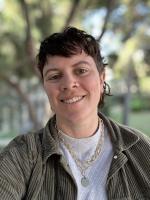
This session is held by Ro Scavotto
I’m Ro (they/them), a biology and environmental science teacher from Massachusetts, USA, now living in Barcelona, Spain.